
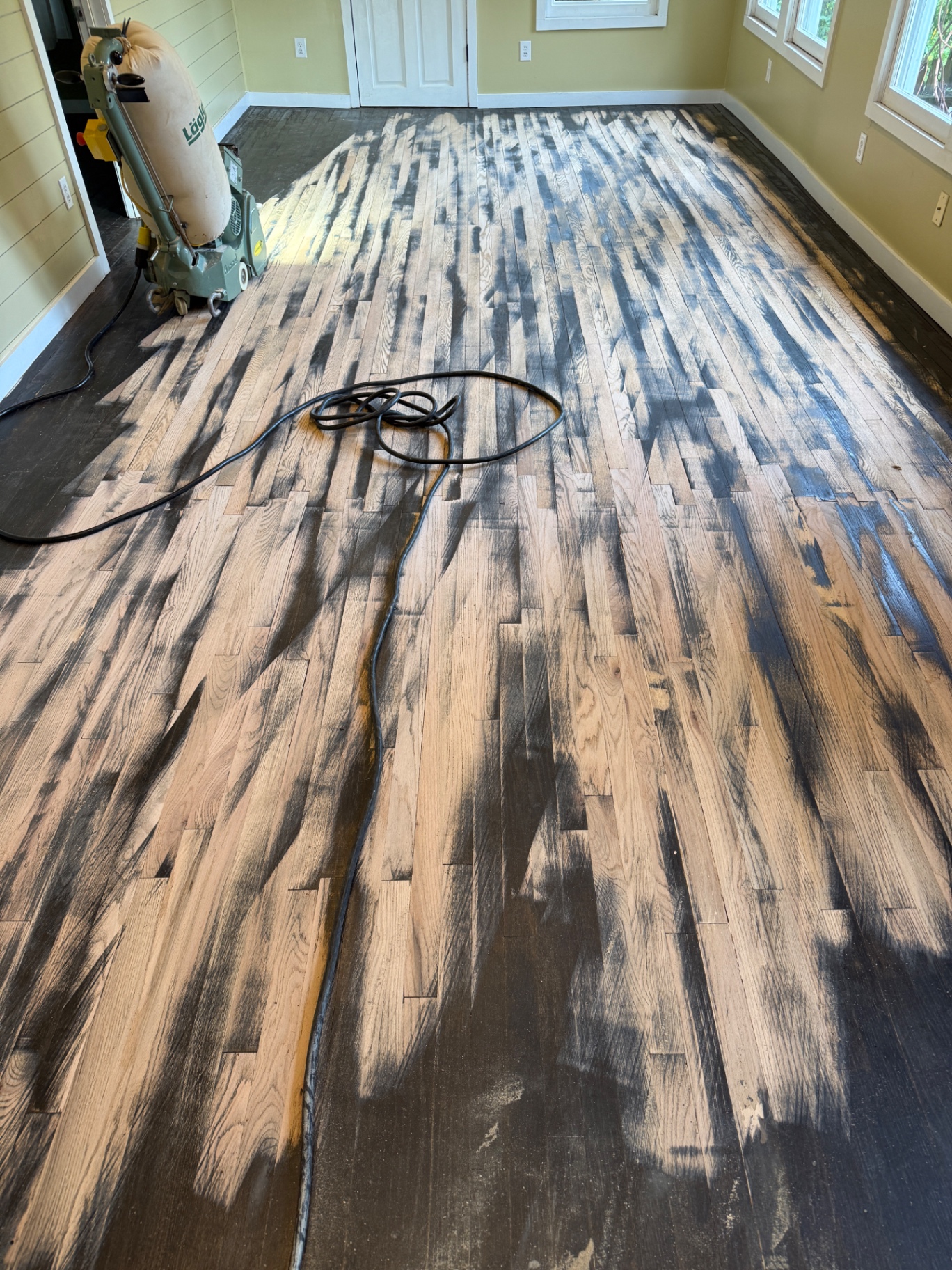
What we found
Original 2¼" red oak strip. Cloudy orange oil-based varnish, worn through to bare wood along the path between the front door and the kitchen, dark staining in the corner where a dog had slept for a decade, and a general grey cast that made the whole room feel tired.
The owners had two quotes for full replacement in hand. Both were substantial.
The five-minute measurement
We lifted a floor vent. Above the tongue there was a healthy band of solid oak — enough for at least three more refinishes.
Nothing about the damage was structural. All of it was in the top sixty-fourth of an inch. This is the most common misdiagnosis in the trade, and it costs homeowners more money than anything else we see.
The parts that took real work
Eleven boards had urine penetration through the full thickness. Those had to come out. We cut on staggered joints so the repair would not read as a rectangle, sourced quartersawn red oak to match the original cut, and set them flush.
The bay window was the other slow part. Three angled walls, a radiator, and no way to get a machine into the corners means hand sanding through the whole grit progression.
The photograph above is halfway through the first cut. That contrast between the sanded and unsanded halves is the entire argument for refinishing rather than replacing.
Color
They wanted the orange gone. They did not want a grey floor in a craftsman bungalow, which would have fought the trim and the brick.
Three samples on the floor itself, left overnight so they could see them in evening light. They chose a neutral sealer under a matte waterborne — amber removed, red oak's natural warmth left completely alone. It looks like the house.
More from the journal