
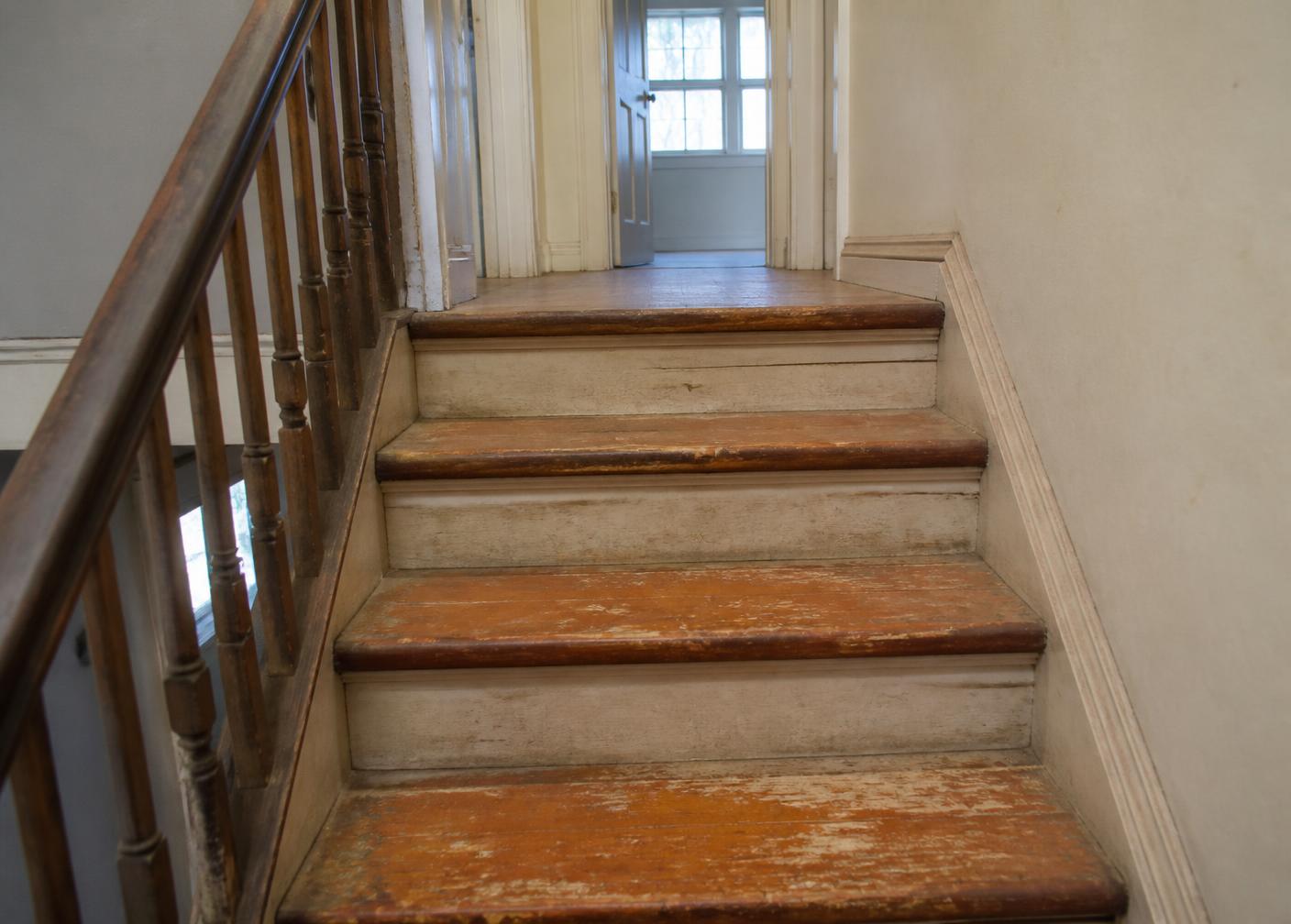
The condition
Carpet had come off around 2005 and nothing had happened since. Peeling orange varnish, hundreds of staple holes, and nosings worn round at the leading edge from twenty years of traffic on bare treads.
Three treads moved underfoot. One squeaked loudly enough to wake the house.
Structure before finish
We tightened everything first. Finishing over movement means doing the work twice, and a beautiful staircase that creaks is a failure.
Why it takes six days
There is no machine for this. Every tread is sanded by hand through the full grit progression, worked into the corners against the skirt and the stringer, and around every baluster.
Nosings are the part that separates a restoration from a refinish. It is easy to sand a worn nosing into a soft round bullnose and lose the original profile entirely. Preserving it means working the top face without touching the front, which is slow and entirely by feel.
Color and access
Two rounds of samples. Stair treads are usually cut differently than the floor they meet, so they take stain differently and a color that matches on paper reads wrong in place.
We finished alternating treads so the family could keep using the stairs the whole time — one set, cure, then the other. It adds days and it means nobody has to move out.
Painted risers at the end, and the entry became the best-looking room in the house.
More from the journal